Zipline Recruits Tesla, Uber, Waymo Execs to Scale US Drone Delivery
Drone delivery startup Zipline is expanding across the US, bringing in seasoned executives from Tesla, Uber Eats, and Waymo to accelerate its growth.
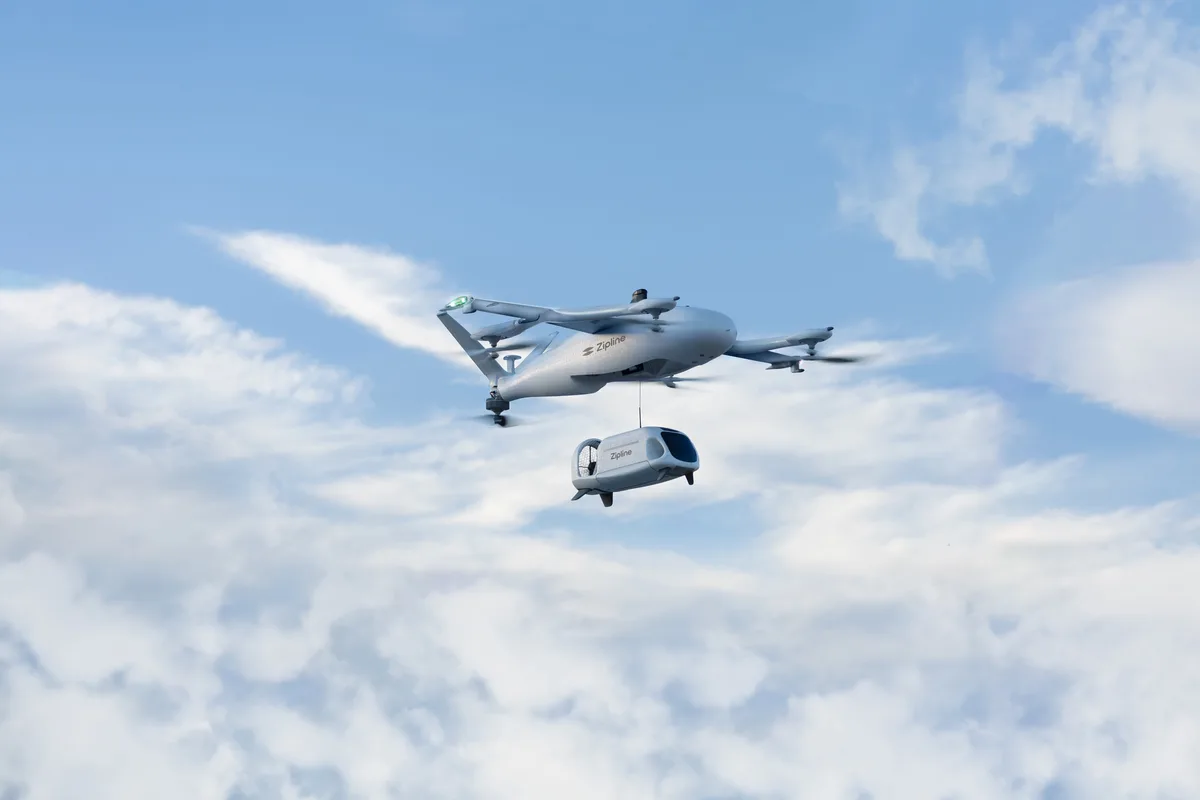
Zipline, the drone delivery company best known for its medical supply missions in Africa, is making a serious push to normalize autonomous aerial delivery across the United States. The company's latest move signals a clear strategic shift: recruit proven operators from the most disruptive mobility companies of the past decade and leverage their expertise to crack a market that has long promised more than it has delivered.
The executive hires from Tesla, Uber Eats, and Waymo are not arbitrary. Each of those companies represents a distinct chapter in the story of scaling hard technology into everyday consumer behavior — electric vehicles, on-demand food logistics, and autonomous driving, respectively. Bringing that institutional knowledge into Zipline suggests the startup is thinking less about proof-of-concept and more about the messy, competitive work of building operational infrastructure at scale in new US markets.
Read more Velocity Raises $38M to Build Enterprise Stablecoin Treasury Tools →
Drone delivery in the United States has faced persistent headwinds, from Federal Aviation Administration regulatory complexity to public skepticism about noise and airspace safety. What separates Zipline from many competitors is a track record of real-world deployments — not just pilot programs — which gives its expansion narrative more credibility than most. Whether seasoned executives from incumbent tech giants can translate their experience into this still-nascent logistics category remains the critical open question.
For consumers and retailers alike, the promise of drone delivery has always been speed and cost efficiency for last-mile logistics, one of the most expensive segments in supply chain operations. If Zipline's new leadership team can replicate even a fraction of the scaling velocity their former employers achieved, the competitive dynamics of US delivery markets could shift meaningfully in the years ahead. The broader industry will be watching closely.
Continue reading at US Top News and Analysis