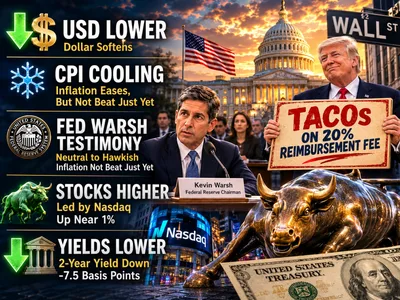
Warsh Vows Fed 'Regime Change' to Eliminate Inflation Burden
Fed chair contender Kevin Warsh pledges a fundamental shift in monetary policy to conquer inflation he calls a hidden tax on Americans.

Kevin Warsh, widely regarded as a leading candidate to lead the Federal Reserve, made his most pointed remarks yet about his vision for the central bank, promising what he described as a monetary policy "regime change" aimed squarely at eliminating inflation that has persisted for the better part of five years. His framing of inflation as a "tax" on ordinary Americans is a deliberate rhetorical choice — one that aligns central banking priorities with the economic anxieties felt most acutely by working- and middle-class households.
The pledge to "get monetary policy right" signals dissatisfaction with the Fed's performance since inflation surged in the post-pandemic period. For critics of the central bank, the slow and contested response to rising prices represented an institutional failure — and Warsh appears to be positioning himself as the corrective force. A regime change in central banking language typically implies not just different policy settings, but a fundamental rethinking of frameworks, communication strategies, and institutional credibility.
Read more June CPI Rises 3.5% Annually, Beating Inflation Forecasts →
The political dimensions of Warsh's positioning are hard to ignore. By casting inflation as a tax — a concept with deep resonance in conservative economic thought — he is effectively arguing that price instability is not merely a technical challenge but a moral and distributional one. Families paying more for groceries, rent, and energy bear the cost of monetary missteps in ways that wealthier asset-holders, insulated by appreciating portfolios, often do not.
Whether a new Fed leadership could realistically deliver a sharper break from current policy depends heavily on the institutional constraints that bind any chair — including the independence of the Federal Open Market Committee and the lag effects inherent in monetary transmission. Warsh's language is bold, but translating regime rhetoric into durable disinflation without triggering a recession would test any central banker. Markets and economists will be watching closely to see whether substance follows the signal.
Continue reading at US Top News and Analysis.