June CPI Surprises Sharply Lower, Boosting Fed Rate Cut Hopes
US inflation fell to 3.5% in June, well below forecasts, as energy, shelter, and core services all cooled significantly.
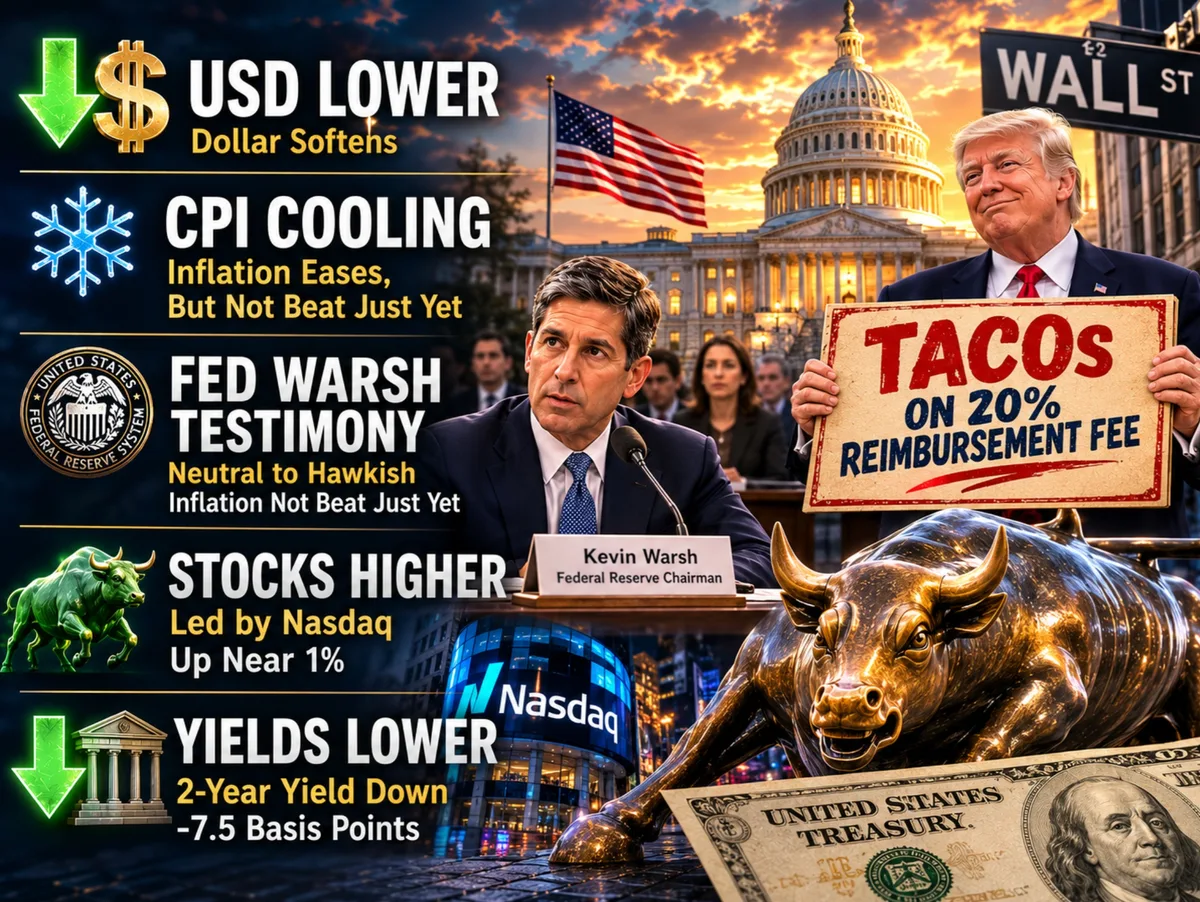
The June Consumer Price Index report delivered a decisive downside surprise, offering the most compelling evidence in months that the post-spring inflation rebound has stalled. Headline CPI slowed to 3.5% year-over-year, down from 4.2% the prior month and well below the 3.8% consensus forecast. On a monthly basis, prices actually fell 0.4%, a sharp contrast to the 0.1% increase economists had anticipated.
The cooling was not confined to one category — it was genuinely broad-based. Energy costs, led by tumbling gasoline prices, accounted for much of the headline decline, but the underlying data told an equally encouraging story. Shelter inflation posted its smallest monthly gain since January 2021, while core services excluding shelter — a closely watched gauge of sticky domestic inflation — recorded its softest reading since May 2020. Core CPI eased to 2.6% annually and was flat on the month, the weakest monthly core print since early 2021.
Read more Warsh Vows Fed 'Regime Change' to Eliminate Inflation Burden →
The breadth of the improvement matters analytically. Softness spread across motor vehicle insurance, apparel, used cars, medical care, and lodging, suggesting this is not a statistical fluke driven by a single volatile component. When disinflation is this distributed, it tends to be more durable — and more meaningful to policymakers weighing the timing of rate adjustments.
Market reaction was swift. The US dollar sold off sharply, and traders moved to scale back expectations for how long the Federal Reserve would hold rates at current levels. Fed Chair Warsh, testifying the same day, signaled the central bank has zero tolerance for persistent inflation, though his remarks were tempered by the notably benign data. Chicago Fed President Goolsbee called the June reading "surprisingly benign." Meanwhile, RBC revised its US and Canadian growth forecasts higher but still sees both the Fed and the Bank of Canada staying on hold through 2026, a reminder that one soft print, however striking, rarely rewrites a full monetary policy cycle.
Continue reading at Forexlive.