Investors Shift Away from Mag 7 and Crypto Toward AI Bottlenecks
Capital is rotating out of high-flying tech giants and digital assets as investors hunt for overlooked infrastructure plays in artificial intelligence.

A notable reallocation is underway in financial markets, with investors pulling back from the so-called Magnificent Seven technology stocks and cryptocurrency positions in favor of assets tied to the physical and logistical constraints of artificial intelligence development. The shift reflects a maturing investment thesis: the easy, narrative-driven bets on AI's biggest winners are giving way to more targeted wagers on the chokepoints that determine how fast the technology can actually scale.
This rotation signals a broader evolution in how sophisticated capital views the AI opportunity. Rather than simply owning the largest names associated with the trend — the hyperscalers, the GPU champions, the token ecosystems — investors appear to be drilling down into what actually limits AI's expansion. Supply chain constraints, power infrastructure, specialized semiconductors, and data center capacity represent the kinds of structural bottlenecks that can generate durable returns even when headline valuations in the sector grow frothy.
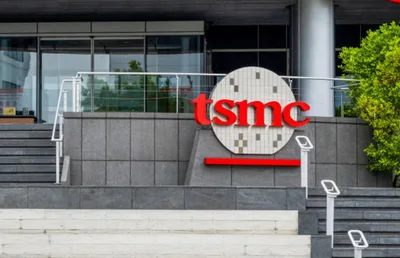
Read more TSMC Upgraded to Buy as AI Demand and EUV Edge Converge →
The retreat from crypto, in particular, is worth examining carefully. Digital assets had briefly been swept up in the AI enthusiasm, with some tokens marketed as foundational to decentralized AI compute. That correlation appears to be unwinding as institutional money grows more discriminating, separating genuine AI infrastructure exposure from speculative narrative overlap. The message from allocators seems clear: proximity to the AI story is no longer sufficient — the investment must sit at an actual point of scarcity.
For the Magnificent Seven, the rotation does not necessarily imply a structural bear case, but it does suggest that the group's role as a default vehicle for AI optimism may be fading. As the AI build-out matures, the market's attention naturally gravitates toward second-order beneficiaries — companies whose growth is constrained only by how quickly AI adoption accelerates, rather than by their own ability to execute. That dynamic historically rewards patient, research-intensive investors who identify bottlenecks before they become consensus trades.
Continue reading at CoinDesk.