U.S. Auto Industry Braces for Uncertainty Over USMCA Future
Automakers face mounting uncertainty as the USMCA trade deal's future remains unresolved, with rules of origin at the center of the debate.
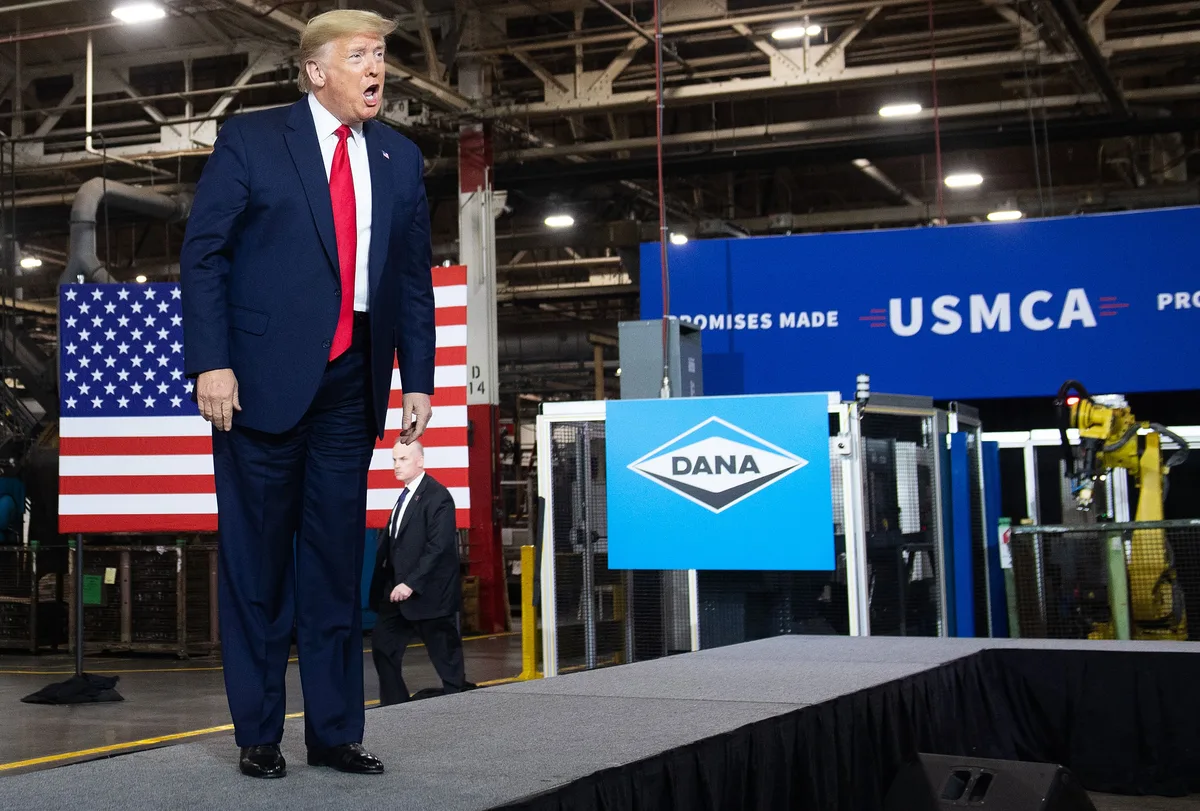
The American auto industry is confronting a period of significant uncertainty as questions mount over whether the United States-Mexico-Canada Agreement will be extended, leaving manufacturers to weigh contingency plans against an unclear policy horizon. The stakes are considerable: USMCA governs the bulk of cross-border automotive supply chains across North America, and any lapse or renegotiation could ripple through production schedules, pricing, and investment decisions.
At the heart of the dispute are the agreement's rules of origin — the technical provisions that define where a vehicle or its components are considered to have been manufactured, and which goods qualify for duty-free or preferential trade treatment. For automakers operating sprawling, multi-country supply chains, these rules are not administrative fine print. They directly determine cost structures, influencing where companies source parts, where they assemble vehicles, and ultimately what consumers pay at the dealership.
Read more Caidya and Simbec-Orion Merge to Build Global CRO Platform →
Without a clear extension or successor framework, automakers face a familiar but particularly uncomfortable dilemma: commit to long-term capital investments in factories and supplier relationships, or hold back while waiting for political clarity. The auto sector's capital intensity makes it uniquely vulnerable to trade policy ambiguity — retooling a plant or shifting a supplier relationship is measured in years and billions of dollars, not quarters.
The broader economic context amplifies the concern. North American automotive manufacturing has already navigated semiconductor shortages, pandemic-era demand swings, and the accelerating transition to electric vehicles. Layering trade policy uncertainty onto those existing pressures compounds the risk for an industry that employs hundreds of thousands of workers across the U.S., Mexico, and Canada. Executives and analysts alike will be watching closely for any signals that Washington intends to prioritize renewal — or use the deal's expiration as leverage in broader trade negotiations.
Continue reading at US Top News and Analysis