Oil Prices Retreat but Hold Huge Weekly Gains Amid Middle East Risk
Crude pulls back Friday but remains on track for double-digit weekly gains as geopolitical tensions keep markets on edge.
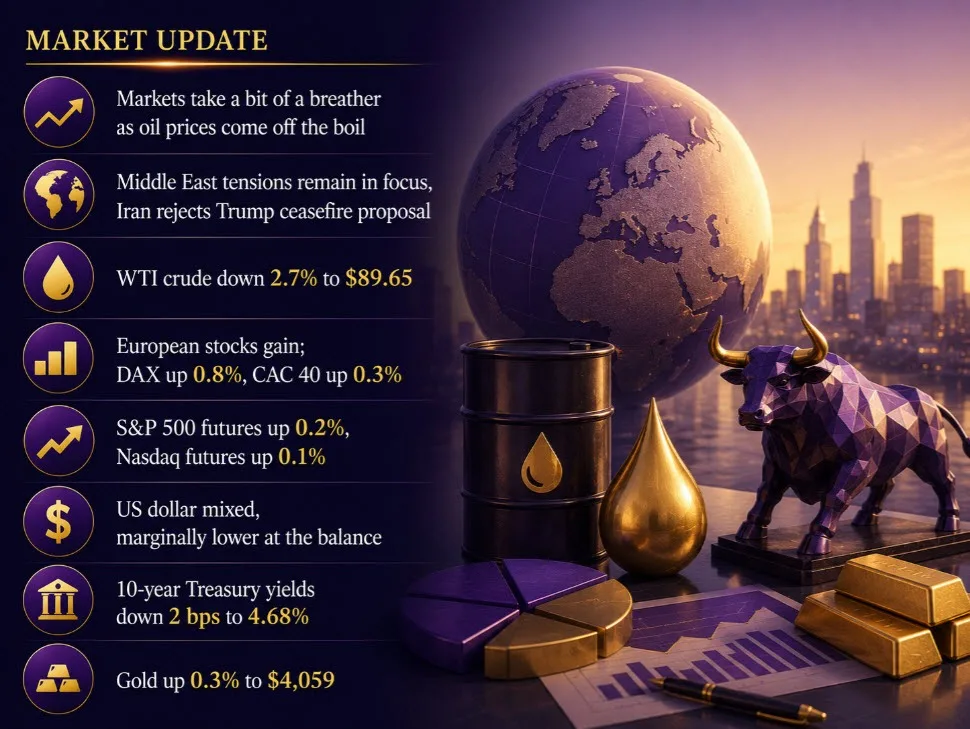
Global markets took a measured pause Friday as oil prices eased from their weekly highs, though the pullback did little to alter the broader picture of a commodity market still pricing in significant geopolitical risk. WTI crude slipped 2.7% to $89.65, while Brent fell 2.6% to $98.05 — moves that look modest when set against weekly gains of roughly 9% and 11%, respectively. The day's softness reads less as a trend reversal and more as a natural exhale heading into a weekend when Middle East developments remain unpredictable.
The brief relief in oil fed through to the bond market in an orderly fashion. Ten-year U.S. Treasury yields eased two basis points to 4.68%, while German 10-year bunds slipped from 3.20% to 3.18%. That modest drift lower in yields took some pressure off the dollar, allowing the euro to inch up 0.1% against it, with the Australian dollar leading G10 currencies and the Swiss franc and greenback lagging — a mild risk-on signature rather than a full-throated rally.
Read more Intel Surges on Strong Quarter; Amkor Gets UBS Upgrade →
On the European data front, the session carried genuine positive surprises that deserve attention beyond the oil noise. Germany's flash manufacturing PMI for July came in at 52.2, well above the 50.5 consensus, suggesting the eurozone's largest economy may be stabilizing faster than feared. Eurozone-wide business activity rose for the first time in four months, and the UK's services PMI printed at 51.8 against a 49.4 expectation, while British retail sales jumped sharply in June. Taken together, the data modestly shift the macro narrative toward resilience, at least for now.
The European Central Bank remained a central conversation. Policymaker Nagel cautioned against pre-committing to any rate move ahead of the September meeting, while ECB board member Kocher said there is no evidence yet of damaging second-round inflation effects but left the door open to further action if the outlook deteriorates. That conditional language keeps markets guessing on whether the ECB's current pause becomes a permanent hold or a temporary one — a question that will grow louder as summer ends and energy prices remain elevated.
The interplay between geopolitical risk premiums in oil and the trajectory of central bank policy in Europe represents one of the most consequential tension points for markets heading into the third quarter. A weekend that passes without major escalation could accelerate Friday's relief trade; one that does not would likely send crude back toward — or beyond — this week's highs. Continue reading at Forexlive.