Musk Bets Tesla's Humanoid Robot Will Eclipse Every Product Ever Made
Elon Musk calls Tesla's Optimus robot the biggest product in history, while flagging China as the most serious competitive threat.

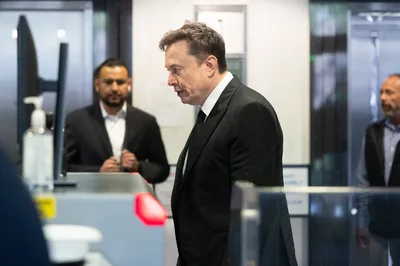
Elon Musk has never been shy about grand predictions, but his latest claim raises the stakes considerably: the Tesla and SpaceX chief is now arguing that the company's Optimus humanoid robot will become the single most consequential product ever brought to market, surpassing everything from the automobile to the smartphone. In Musk's framing, "nothing will even be close" — a characteristically sweeping declaration that nonetheless points to a real and accelerating industrial trend reshaping manufacturing, logistics, and eventually domestic life.
The competitive battlefield Musk envisions is not the highway, where Tesla has spent years building its electric vehicle dominance, but factory floors, warehouses, and ultimately private homes. Humanoid robots capable of performing physical labor in environments designed for humans represent an enormous addressable market — one that analysts across the industry broadly agree could eventually dwarf consumer electronics or passenger vehicles in economic scale. The logic is straightforward: if a general-purpose robot can substitute for human labor across multiple sectors, the total value it unlocks is effectively unbounded.
Read more Pizza Chain to Shutter Up to 50 Locations Amid Prolonged Sales Slump →
Yet Musk simultaneously acknowledged that the path to that future runs directly through a formidable rival. He identified China as the toughest competitor in the humanoid robotics race, offering no equivocation — "no two ways about it." Chinese manufacturers have invested heavily in robotics infrastructure, benefit from deeply integrated supply chains, and operate under industrial policy frameworks that can accelerate hardware deployment at a pace Western firms struggle to match. For Tesla, that means the Optimus program is not just a product launch; it is a geopolitical contest with long-term implications for technological leadership.
The broader significance of Musk's comments lies less in their promotional tone and more in what they signal about where serious capital and engineering talent are flowing. Major technology and industrial firms worldwide are racing to prove that bipedal robots can achieve the reliability and unit economics needed for commercial scale. Whether Musk's timeline and magnitude claims prove accurate, the underlying competition he describes is already underway — and the outcome will likely define the next chapter of automation far more than any individual vehicle or device. Continue reading at Yahoo.