How Trump's Election Meddling Speech Rattled Markets
Trump's accusation that China engaged in 'sinister election meddling' in 2020 added fresh geopolitical uncertainty to already skittish markets.
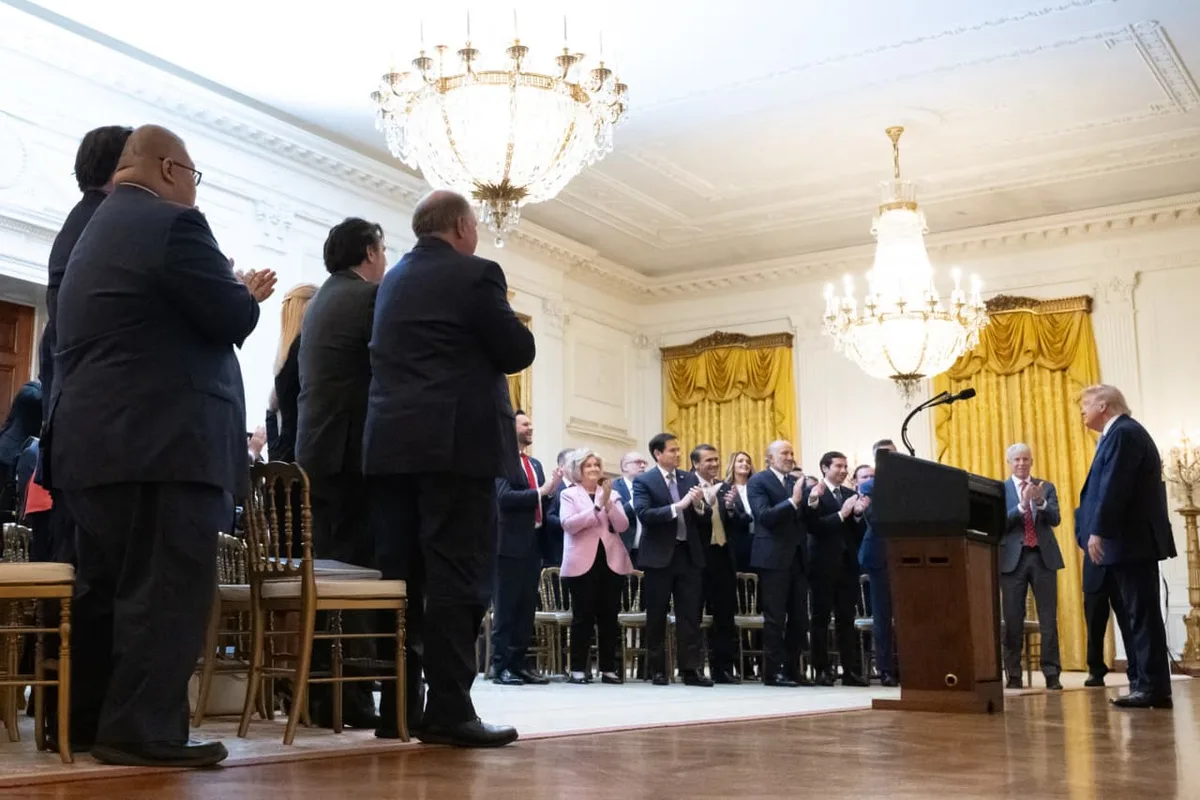
When a sitting president steps to a podium and levels accusations of foreign election interference, markets tend to listen — and not always favorably. President Trump's recent speech, which included pointed allegations that China engaged in what he called 'sinister election meddling' during the 2020 election cycle, appears to have introduced a new layer of uncertainty into investor sentiment at a moment when stability is already in short supply.
The concern from a market perspective is not necessarily whether the accusations are true or false, but what they signal about the trajectory of U.S.-China relations. Any rhetorical escalation between the world's two largest economies carries the risk of spilling into trade policy, diplomatic channels, or regulatory decisions — each of which can move asset prices in meaningful ways. Investors have learned, often the hard way, that geopolitical flashpoints between Washington and Beijing rarely stay contained.
Read more Strait of Hormuz Ship Traffic Falls Amid US-Iran Tensions →
There is also a broader question of what this kind of speech does to domestic political temperature. Heightened tensions around electoral legitimacy tend to inject unpredictability into the policy outlook, making it harder for businesses and investors to model the regulatory and legislative environment months or years ahead. That uncertainty itself has a cost, even when no concrete policy change follows immediately.
Analysts watching the intersection of politics and markets will note that accusations of this magnitude — directed at a nuclear-armed global competitor — can shift sentiment faster than economic data. In an environment where markets are already parsing every signal from the Federal Reserve and monitoring trade developments, adding a geopolitical provocation into the mix is rarely a stabilizing force. The durability of any market reaction will likely depend on whether the rhetoric translates into concrete policy action or remains in the rhetorical arena.
Continue reading at MarketWatch.com