Guggenheim Says ServiceNow and Salesforce Are Buys Amid AI Fear Selloff
A Guggenheim analyst argues that Wall Street has overreacted to AI disruption fears, making both software stocks attractively valued.
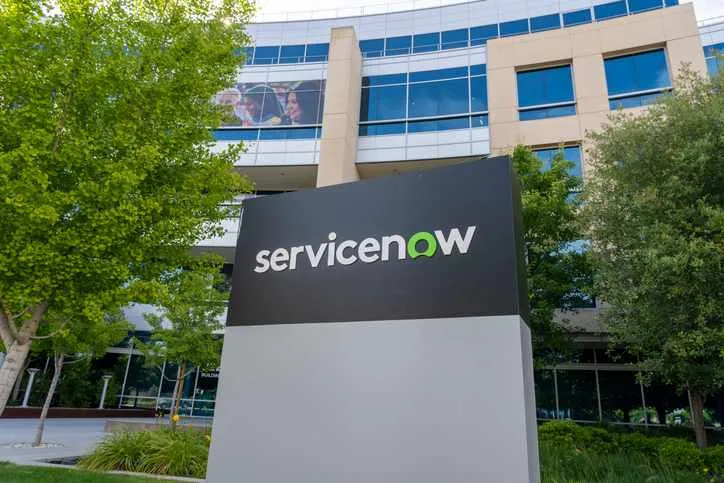
Wall Street's anxiety over artificial intelligence displacing legacy enterprise software has driven valuations for ServiceNow and Salesforce to levels that one prominent analyst now considers excessive. Guggenheim is pushing back on what it characterizes as near-apocalyptic market sentiment, arguing that the selloff in both names has created a buying opportunity rather than a warning signal.
The analyst's core thesis is that while the AI threat to traditional software-as-a-service businesses is genuine and should not be dismissed, the market has overcorrected by pricing in an outcome closer to total disruption than the more nuanced competitive evolution likely to unfold. In other words, the risk is real — but the punishment already baked into these share prices may be disproportionate to the probable damage.
Read more Meta's Cloud Ambitions Could Resolve Its AI Spending Dilemma →
Both ServiceNow and Salesforce occupy dominant positions in enterprise workflow automation and customer relationship management, respectively. Their scale, deep customer integrations, and proprietary data moats have historically made displacement difficult, even as new technology paradigms emerged. The critical question investors must weigh is whether generative AI represents a faster or more fundamental shift than previous technological transitions — and Guggenheim appears to believe the answer is no, at least not at the pace implied by current valuations.
This kind of analyst reassessment often signals a sentiment inflection point, though it is not a guarantee of near-term price recovery. When fear-driven selling pushes high-quality software franchises to depressed multiples, contrarian re-ratings can catalyze institutional re-engagement — but only if earnings results validate the underlying business resilience. Investors watching these two names will be scrutinizing upcoming quarters closely for evidence that AI is cutting into revenue or, alternatively, becoming a product tailwind.
Continue reading at MarketWatch.com