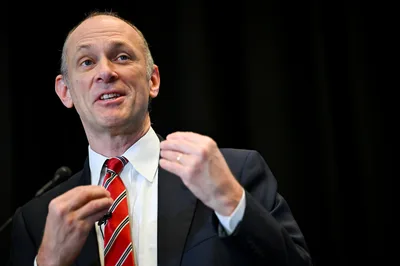
ECB's Schnabel Signals Further Rate Hikes Despite Iran Ceasefire
ECB board member Isabel Schnabel argues monetary tightening should continue regardless of geopolitical de-escalation in the Middle East.

European Central Bank Executive Board member Isabel Schnabel has made clear that the ECB's commitment to fighting inflation remains intact even as geopolitical tensions ease, signaling that a ceasefire involving Iran would not, on its own, justify a pause in the bank's rate-hiking cycle. The statement underscores a broader philosophical stance within the ECB's hawkish wing: that the drivers of inflation in the eurozone are structural enough that external peace dividends should not derail monetary discipline.
Schnabel's position carries significant institutional weight. As one of the ECB's most influential policymakers, her public signals often preview the direction of internal deliberations ahead of formal rate decisions. By decoupling geopolitical relief from monetary policy, she is essentially arguing that lower energy prices from a Middle East ceasefire — while welcome — would not be sufficient to bring inflation sustainably back toward the ECB's 2% target without continued tightening.
Read more Fed Officials Split on Inflation Outlook as Rate Path Stays Murky →
This framing matters for markets and households alike. Investors who had been pricing in a policy pivot on the back of reduced geopolitical risk may need to recalibrate their expectations. The ECB has already delivered a series of rate increases, and Schnabel's remarks suggest the terminal rate may not be as close as some had hoped. The logic is that underlying, or core, inflation — which strips out energy and food — has proven stickier than initially forecast across the eurozone.
The broader analytical takeaway is that the ECB under this guidance is treating geopolitical developments as noise rather than signal for monetary policy. A ceasefire might reduce headline inflation temporarily through lower oil prices, but it does not address wage pressures, services inflation, or fiscal dynamics within member states — all factors that Schnabel and her colleagues appear far more focused on. This is a disciplined, if potentially painful, approach for consumers and businesses navigating higher borrowing costs.
Continue reading at Reuters.