Bitcoin Gets a Quantum Recovery Tool, But Satoshi's Coins Stay at Risk
A new tool aims to help Bitcoin users protect holdings from quantum threats, though Satoshi Nakamoto's estimated 1.1 million coins remain vulnerable.
The specter of quantum computing has long haunted cryptocurrency circles, raising the uncomfortable question of whether sufficiently powerful quantum machines could eventually crack the cryptographic foundations that make Bitcoin secure. A new recovery tool has emerged to address part of that concern — offering users a pathway to safeguard their holdings against potential future quantum attacks. But the solution comes with a significant carve-out that underscores just how complicated Bitcoin's quantum problem really is.
The tool is designed to help contemporary Bitcoin holders migrate their funds to quantum-resistant addresses, a process that would theoretically protect those coins if and when quantum computers become powerful enough to break elliptic curve cryptography, the mathematical backbone of Bitcoin's security model. The development reflects a growing seriousness within the crypto community about preparing for a technological threat that, while not yet imminent, is no longer considered purely theoretical.
Read more Big Tech Faces Pressure to Justify AI Spending Amid Selloff →
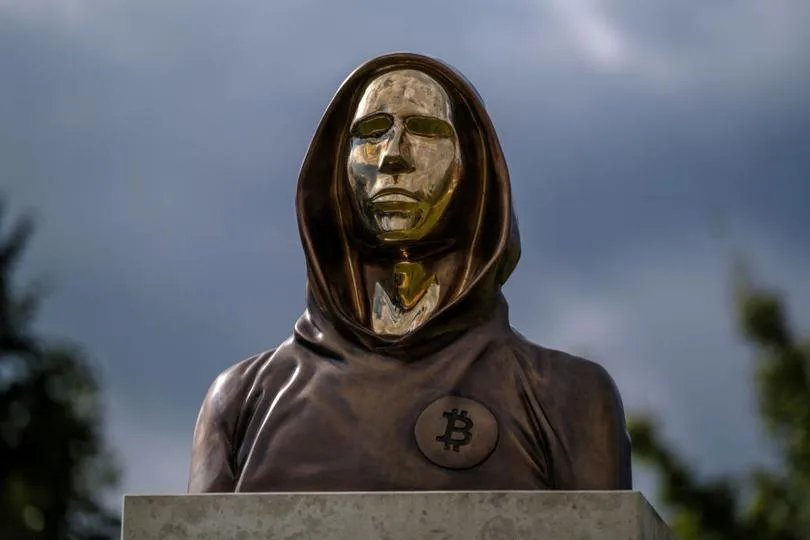
Yet the effort hits a structural wall when it comes to the most symbolically loaded bitcoin in existence: the roughly 1.1 million coins widely attributed to Bitcoin's pseudonymous creator, Satoshi Nakamoto. Those coins have never moved, and because migrating funds requires the holder to actively sign a transaction, any wallet whose private keys are inaccessible — or whose owner is unknown, absent, or deceased — cannot be protected by this tool. Satoshi's coins, in other words, can only be defended by Satoshi.
This limitation reveals a broader tension in Bitcoin's quantum preparedness strategy. Protecting the network is not simply a matter of upgrading software or deploying new cryptographic standards — it requires the active participation of every individual coin holder. Coins sitting in old-format addresses, including pay-to-public-key outputs common in Bitcoin's earliest days, are particularly exposed because the public key is already visible on-chain, giving a quantum attacker a direct target. Satoshi's earliest mined coins fall squarely into this vulnerable category.
The quantum timeline remains contested among cryptographers, with estimates for cryptographically relevant quantum computers ranging from a decade to several decades away. But the fact that developers are already building recovery infrastructure signals that the industry is not willing to wait for the threat to materialize before acting. Continue reading at CoinDesk.