Agency Turf War Stalls Trump's Strategic Bitcoin Reserve Plan
A legal dispute between Treasury and Commerce is delaying the reserve, yet Bitcoin climbed Monday as markets look past Washington's bureaucratic gridlock.
One of the marquee promises of President Trump's pro-crypto agenda is hitting an institutional wall. A plan to establish a U.S. Strategic Bitcoin Reserve — seeded with Bitcoin seized through federal asset forfeitures — has been complicated by an unresolved jurisdictional fight between the Treasury and Commerce departments, each vying for authority to manage the holdings. According to people familiar with the matter cited by Bloomberg, concerns arose over whether Treasury could legally hold Bitcoin on an indefinite basis given the asset's price volatility, prompting officials to explore routing the reserve through Commerce instead.
The Justice Department's Office of Legal Counsel is now working alongside both departments to architect a structure that would survive legal scrutiny. The core challenge is not political will — Trump signed an executive order directing the reserve's creation — but rather the more mundane and often more stubborn question of statutory authority. Whether an executive-branch entity can permanently hold a highly volatile digital asset, without explicit congressional authorization, remains an open question that lawyers are still working to resolve.
Read more FCA Signals Major Shift as AI Agents Intersect With Tokenized Money →
The stakes are substantial. The federal government already holds more than $20 billion in Bitcoin accumulated through criminal seizures across multiple agencies, placing Washington among the largest Bitcoin holders on the planet. Any final determination about where that stockpile is formally housed — and under what legal framework — could carry meaningful supply implications, since clarity on disposition authority would determine whether those coins can ever be sold, lent, or used as collateral.
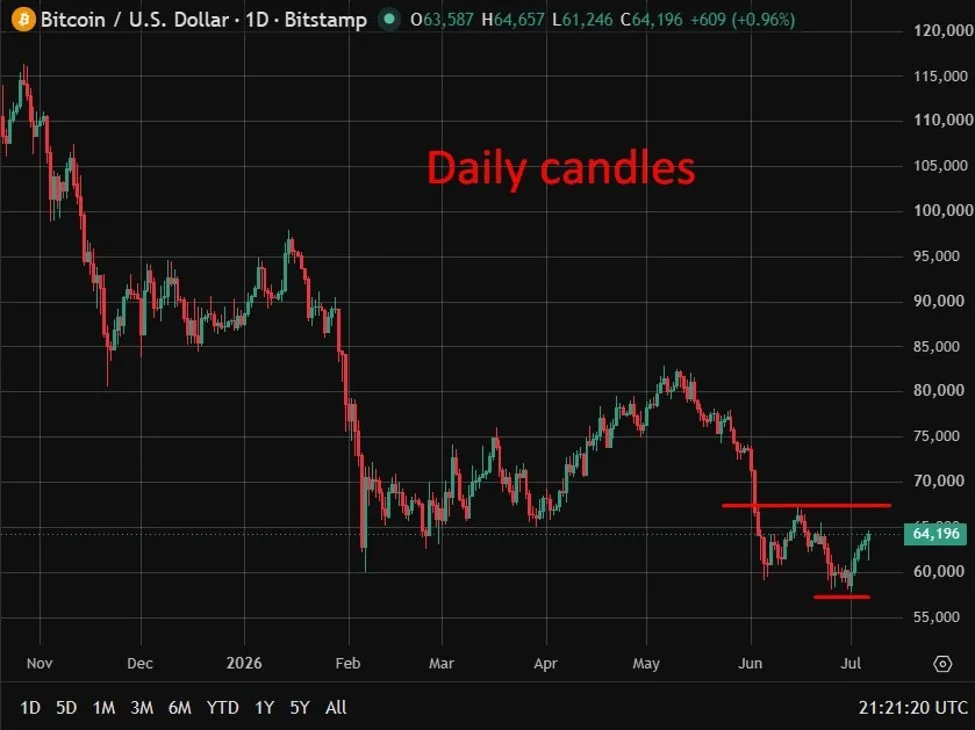
Markets, for their part, appear largely unbothered by the bureaucratic delay. Bitcoin rose on Monday despite the news, even as Strategy — the Michael Saylor-led firm that has been among the most aggressive institutional accumulators — disclosed it sold 3,588 Bitcoin between June 29 and July 5. That the token absorbed both the policy uncertainty and a high-profile institutional sale suggests traders are treating the reserve question as a long-horizon structural development rather than a near-term catalyst. Still, with Bitcoin trading roughly 50 percent below its October peak, the broader picture remains one of a market searching for its next sustained driver.
Continue reading at Forexlive.